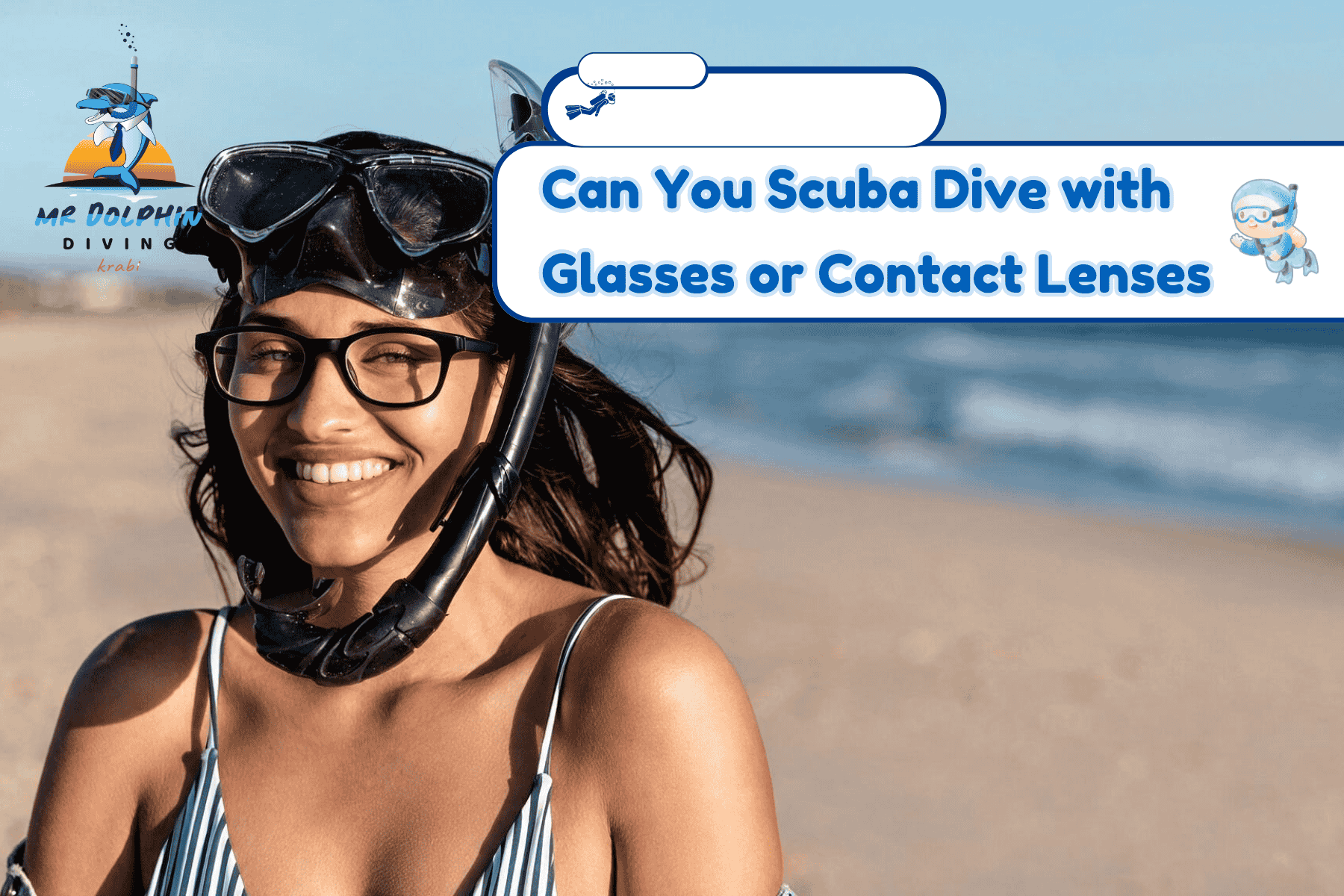
A lot of people who wear glasses assume that diving is just not for them. They picture themselves fumbling around underwater with no idea what they are looking at, and quietly cross it off the list. But that assumption is wrong, and it is one of the more frustrating reasons people talk themselves out of a Discover Scuba Diving experience they would have actually loved.
The honest answer is that poor eyesight is not a barrier to diving. You just need to know your options before you show up at the boat.
Why You Cannot Wear Glasses Underwater
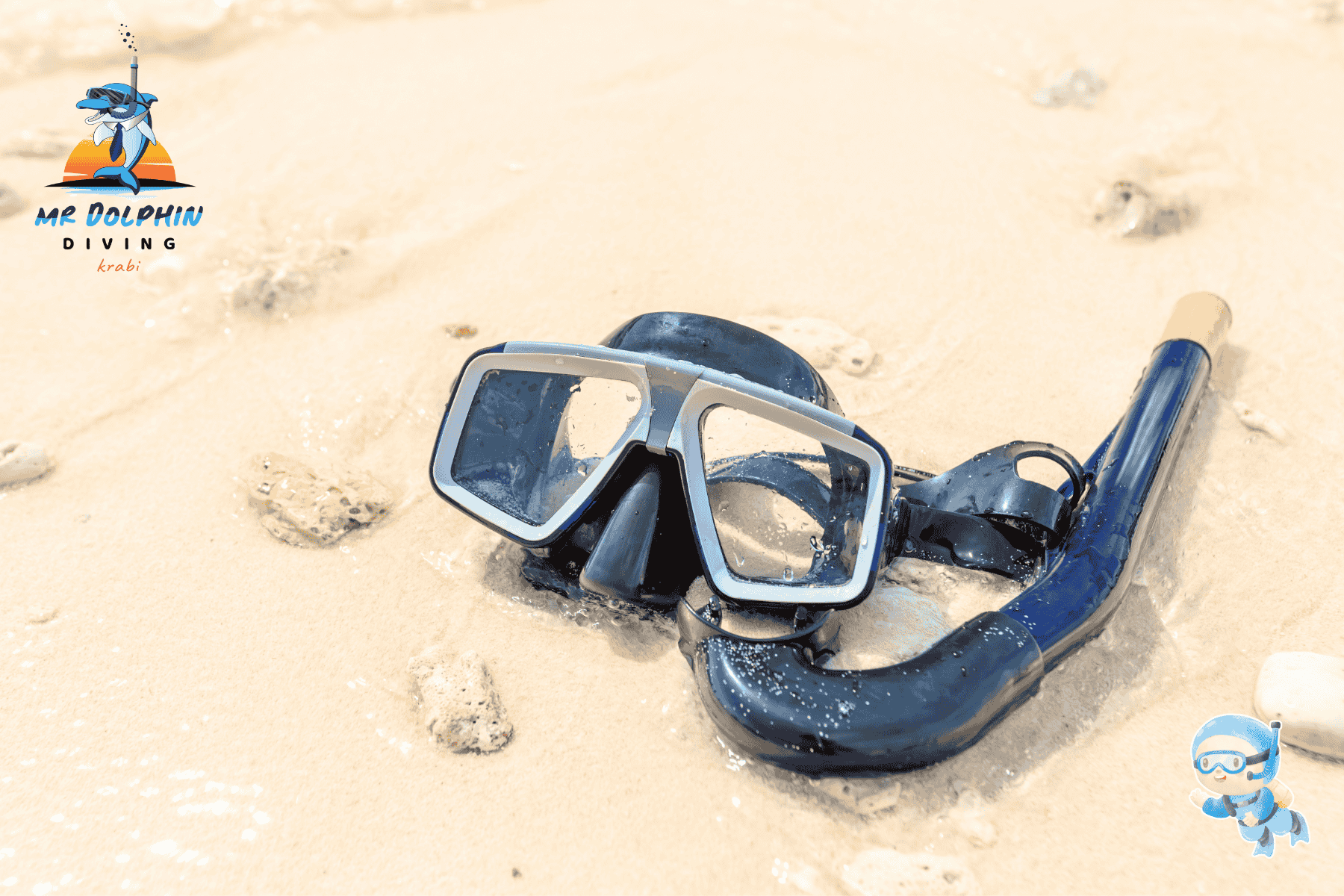
A scuba diving mask works by creating a sealed air pocket in front of your eyes. The frame of regular glasses sits too far from your face for the mask to seal around, and the arms of the glasses break the silicone seal entirely. Water comes in, the mask floods, and you spend the dive clearing it rather than looking at anything.
So regular glasses are out. But that does not mean you are stuck.
Option 1: A Prescription Dive Mask
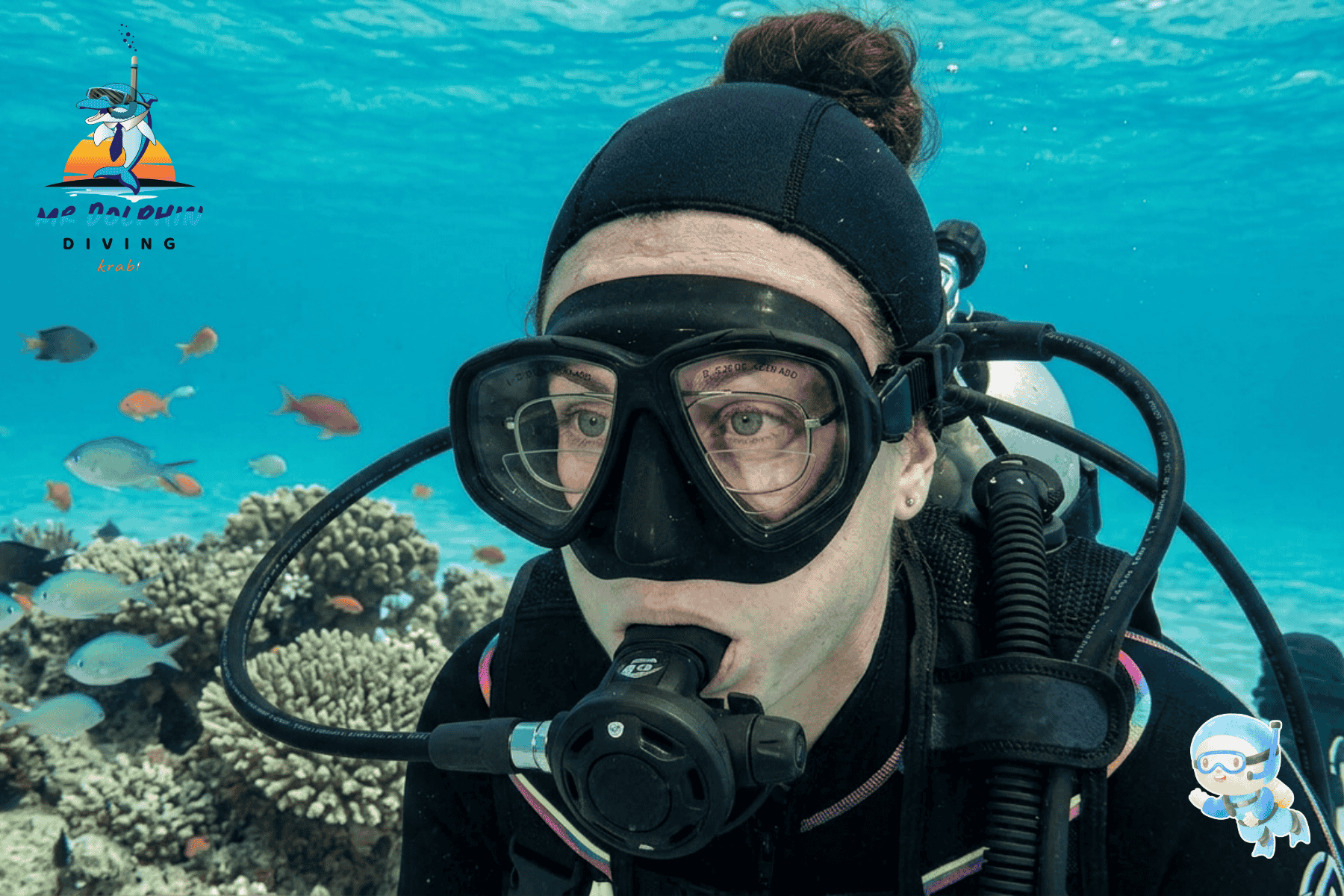
This is the cleanest solution. A prescription dive mask has corrective lenses built directly into the mask itself, ground to match your specific prescription. You put it on, you can see, and that is the end of it.
The trade-off is that you need to order one in advance. They are not something most dive centres keep on the shelf for guests to borrow, so if you are planning to dive in Krabi, this needs to be sorted before you travel. Prices vary depending on the prescription and the brand, but it is a one-time cost that lasts for years of diving.
What to Know Before Ordering
- Standard prescription: A straightforward short or long-sighted correction is easy to order. Most suppliers just need your sphere values for each eye.
- Astigmatism: You can still get a prescription mask made, but you will need to provide the full prescription including cylinder and axis values.
- Single vs dual lens: Dual-lens masks are the better choice here because each lens can be independently adjusted to match your left and right eye separately.
For more on how different mask types compare, the guide to choosing a scuba diving mask covers this in detail.
Option 2: Corrective Lens Inserts
If you do not want to commit to a full prescription mask, lens inserts are a cheaper middle ground. These are small corrective frames that clip or bond inside a standard mask, sitting in front of your eyes without replacing the mask lens itself.
They are widely available online and cost less than a custom prescription mask. The catch is that they come in standardised correction values rather than being made to your exact prescription, so the vision is usually better than nothing but not as sharp as a mask made specifically for you. They also only correct for simple short or long-sightedness, not astigmatism.
For a first dive where you are still figuring out whether you enjoy being underwater, inserts are a reasonable place to start.
Option 3: Diving with Contact Lenses
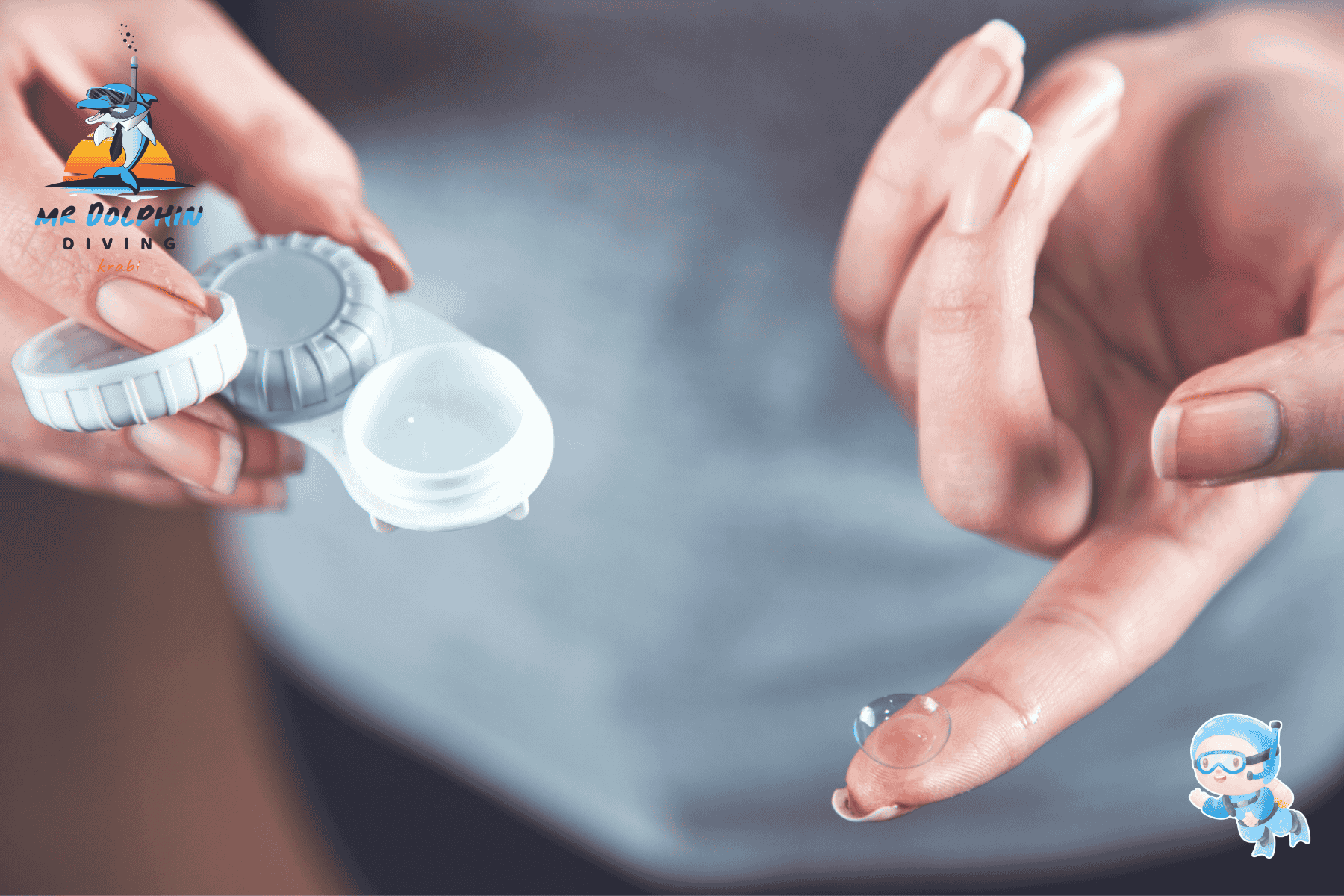
This one comes up a lot, and the answer is more nuanced than most people expect.
Technically, you can dive with contact lenses. Many divers do it regularly without any problems. But there are a few things worth knowing first.
The main concern with soft lenses is that if water gets into your mask, the lenses can absorb it. Salt water contains bacteria and other things you do not particularly want sitting against your eyes for an extended period. There is also a risk of the lenses shifting or coming out if the mask floods.
The Safer Way to Do It
- Use soft daily disposable lenses rather than your regular reusable ones
- Keep your eyes closed if the mask floods and you need to clear it
- Rinse with fresh water and saline after the dive, then swap to a clean pair
- Avoid hard lenses underwater as they can trap water underneath them
If you are doing a fun dive or a Discover Scuba session and you are not comfortable with a prescription mask yet, diving in daily disposables is a reasonable option for most people.
How Much Difference Does It Actually Make
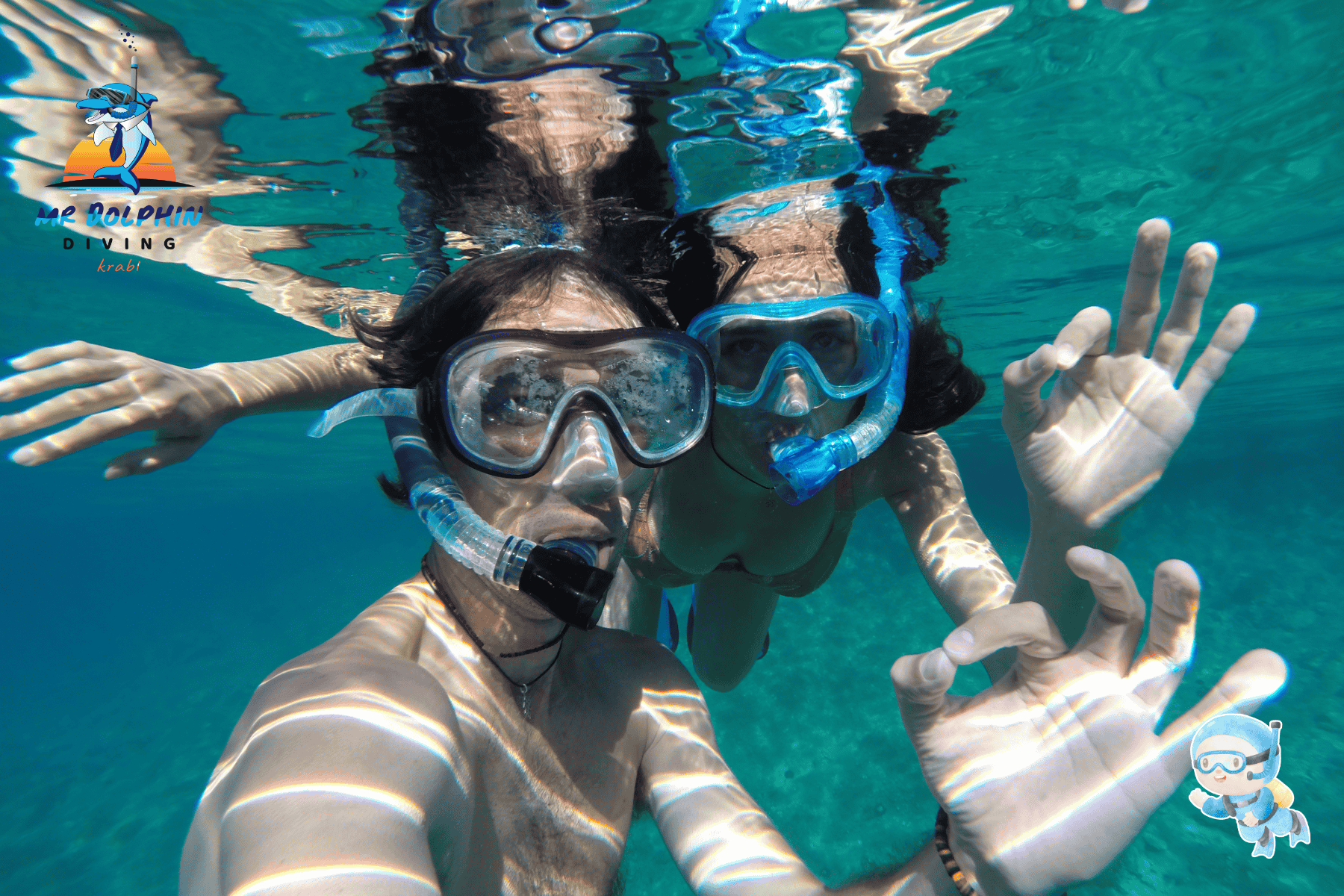
It depends on your prescription. If you are mildly short-sighted, you will still be able to make out the reef, large fish, and your instructor without any correction at all. Marine life does not require reading-level clarity to be impressive.
If your prescription is stronger, diving without correction is genuinely limiting. You will see shapes and colours but miss the detail that makes a dive worth talking about afterwards. A blacktip reef shark resting on the sand at 12 metres is a lot more interesting when you can actually see it clearly.
For anyone planning a trip to Krabi, the visibility at local Ao Nang sites and at Koh Phi Phi is generally good. That means the distance at which you will need to see things clearly matters more than it would in murky water.
What to Sort Out Before You Book
If You Are Getting a Prescription Mask
Order at least two to three weeks before your trip to allow time for manufacturing and shipping. You will need your current prescription from your optometrist. If you have not had an eye test recently, get one before you order.
If You Are Diving in Contact Lenses
Bring daily disposables rather than your regular lenses, and pack saline solution and a fresh pair for after the dive. Let the instructor know before you get in the water.
Either way, mention your eyesight when you book. It is useful for the instructor to know in advance so they can check in with you during the briefing and make sure everything is sorted before the dive starts.
One Thing That Does Not Change
Whatever you end up wearing underwater, the dive briefing covers the same skills regardless. Clearing your mask, equalising your ears, the hand signals. None of that is harder because you wear glasses on land.
The diving hand signals used underwater are designed to be clear at distance, and your instructor stays close throughout the dive, so communication is not something to worry about.
Wearing glasses has stopped a lot of people from booking a dive they would have enjoyed. It should not, and now you know why. If you are heading to Krabi and want to talk through which option makes most sense for your prescription before you arrive, just get in touch.