Before you jump in, there is one thing your instructor will cover that no amount of YouTube videos can fully prepare you for: talking underwater. You cannot speak. Your buddy cannot hear you. And yet, the two of you need to stay coordinated across the entire dive.
That is where diving hand signals come in.
They are not complicated. But getting them wrong, or not knowing them at all, can turn a relaxed dive into a stressful one. This guide covers the signals that actually matter, from the basics every open water diver learns on day one to a few extra ones worth knowing before you head out to a site like Koh Phi Phi.
Why Underwater Communication Matters More Than You Think
On the surface, you can shout, point, and wave your arms. Underwater, none of that works. Visibility can drop, currents can pull you apart from your buddy, and if something goes wrong, you need to communicate fast and clearly.
Scuba hand signals are the universal language of diving. Whether you are diving in Krabi, the Red Sea, or the Great Barrier Reef, the core signals are understood the same way. That consistency matters, especially when you are diving with a guide or buddy you have just met.
According to PADI, all Open Water students must demonstrate knowledge of standard underwater communication signals before completing their certification. These are considered core safety skills, not optional extras.
The Essential Scuba Hand Signals
1. OK
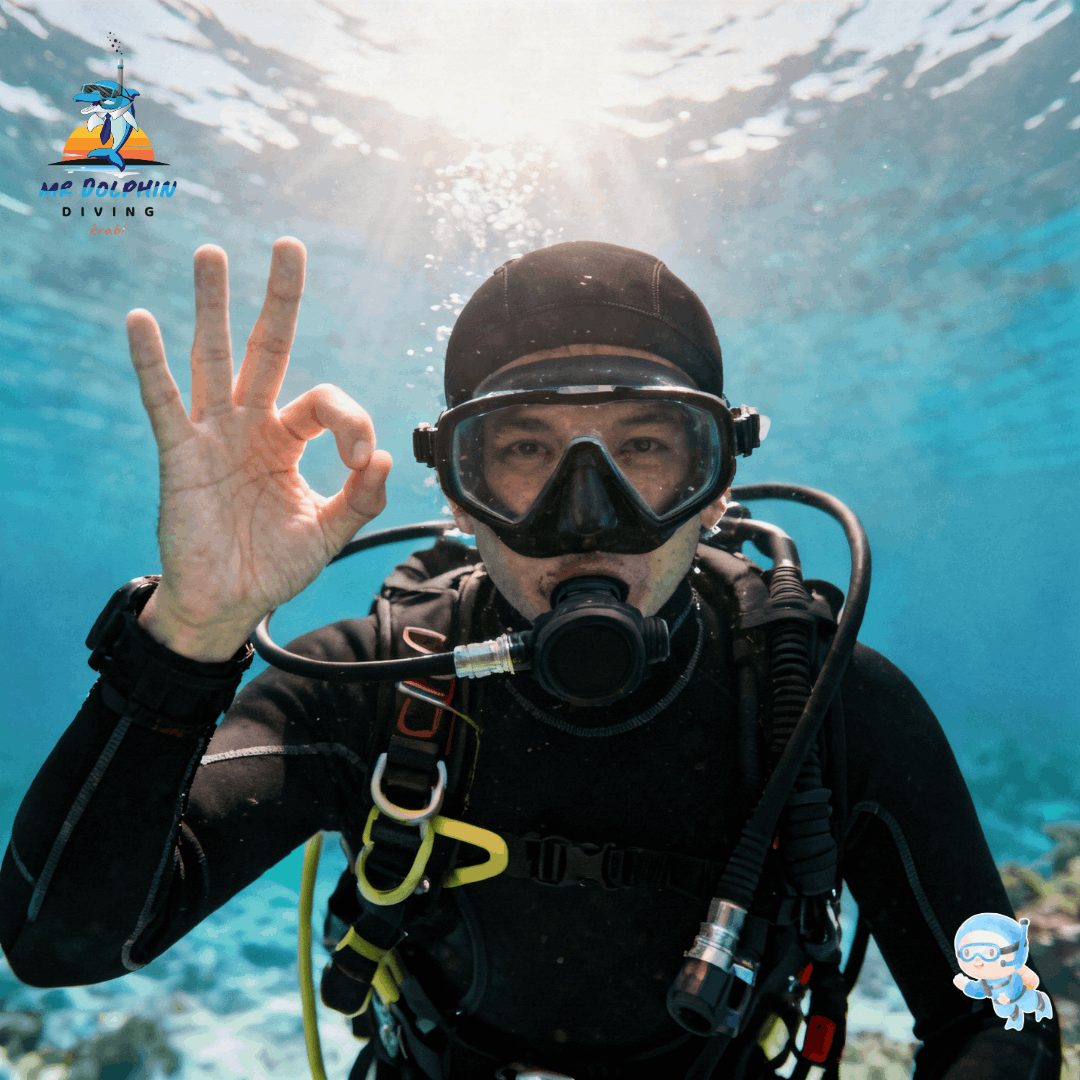
The most used signal in diving. Thumb and index finger form a circle, other fingers up. On the surface, divers sometimes use a closed fist raised above the head instead to avoid confusion with the distress signal used in some regions.
Use it to confirm you are fine, to respond to your buddy checking in, or to signal the dive guide that you are good to descend.
2. Not OK / Something is Wrong
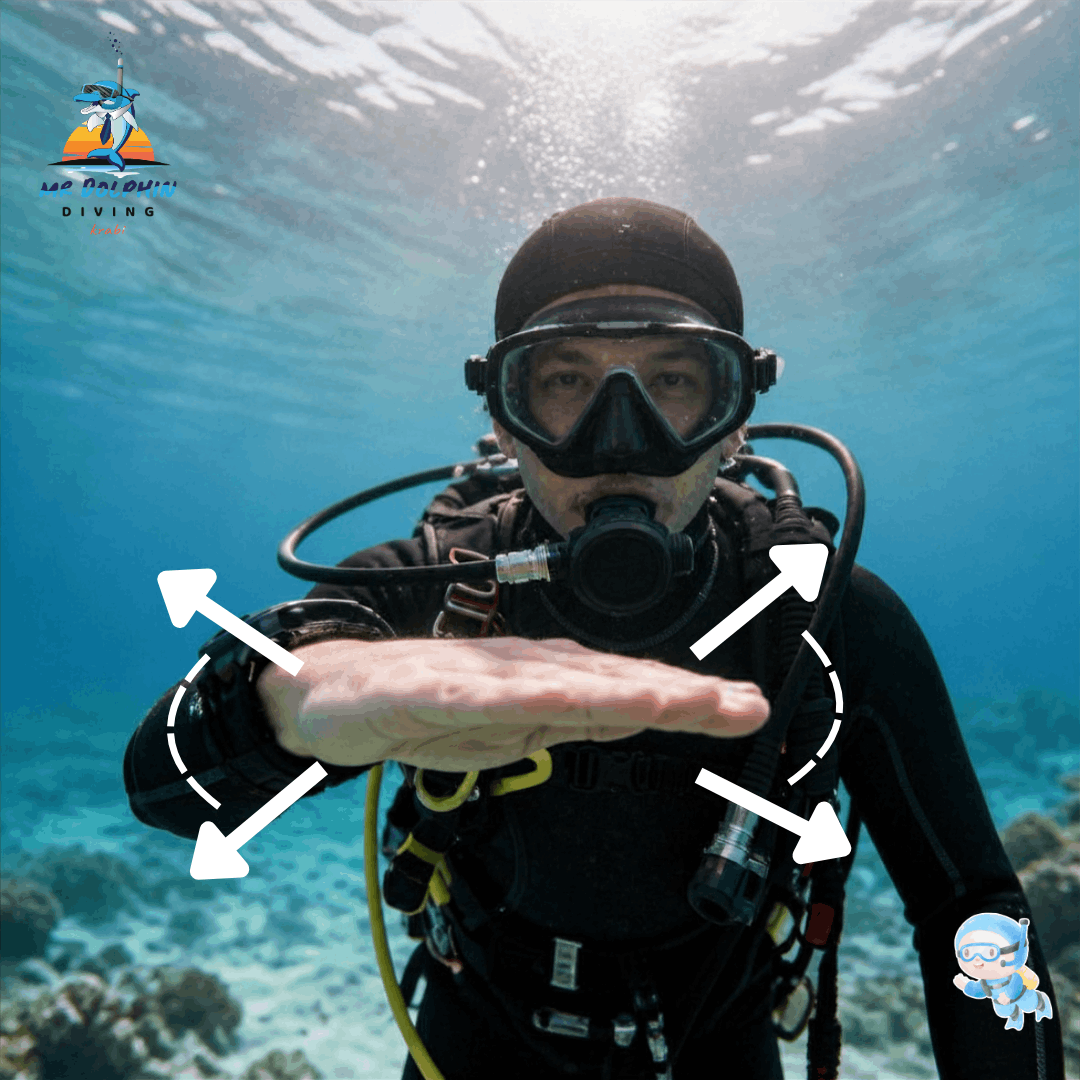
Flat hand, palm facing down, rocked side to side. This is the signal that tells your buddy you are not fine, without specifying what is wrong yet. Once you have their attention, you can follow up with a more specific signal.
Do not brush past this one if your buddy gives it. Stop, get close, and find out what is happening.
3. Go Up / Ascend

Thumb pointing up. Simple, but easy to confuse with the surface OK signal if you are not paying attention to context. On the surface, a thumbs-up means OK. Underwater, thumb up means ascend.
4. Go Down / Descend

Thumb pointing down. Used to signal the start of a descent or to tell your buddy to go deeper.
5. Stop
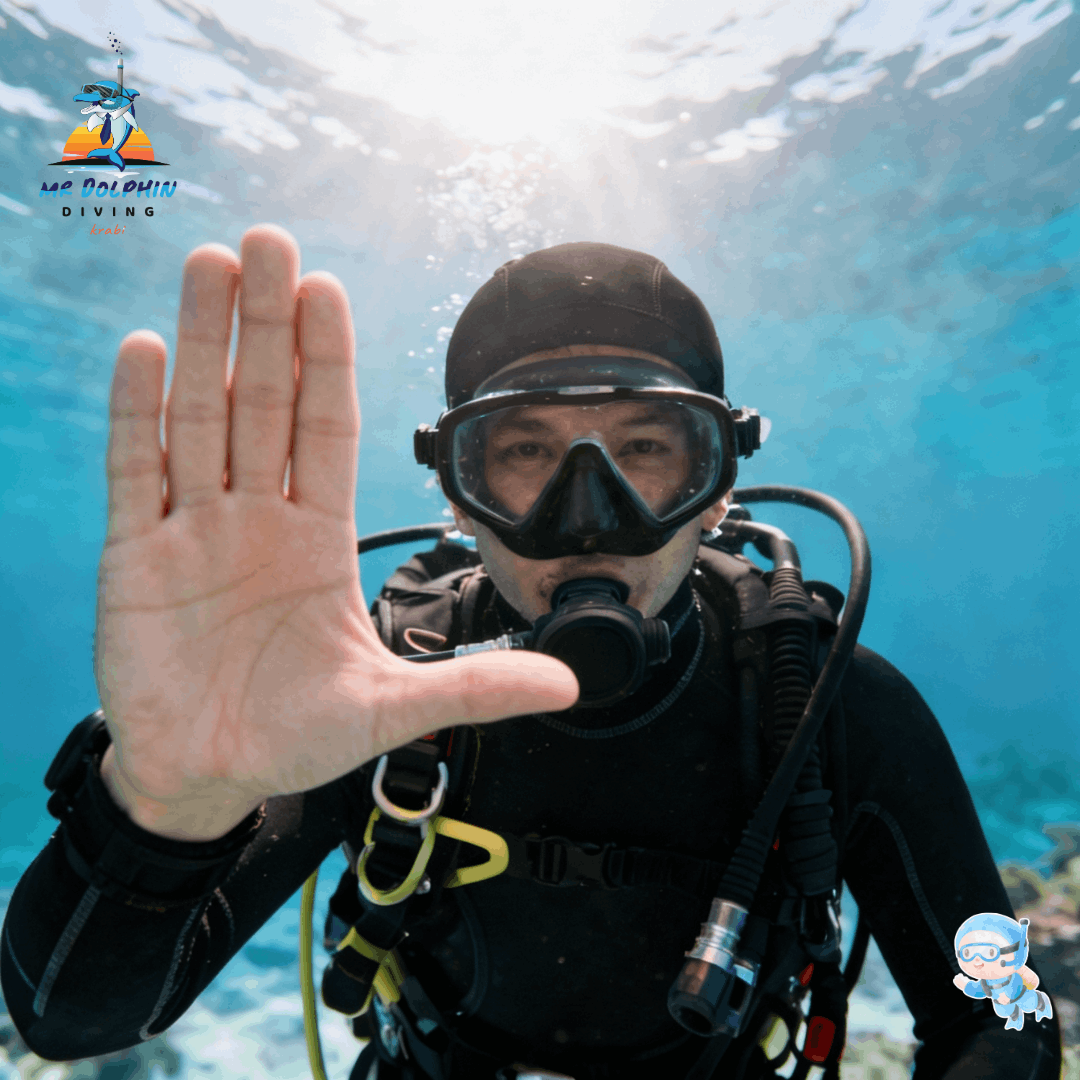
Open palm facing your buddy, fingers together. Hold it and wait. This one is used constantly, whether the guide has spotted something, needs to regroup the team, or wants everyone to hold position.
6. Come Here
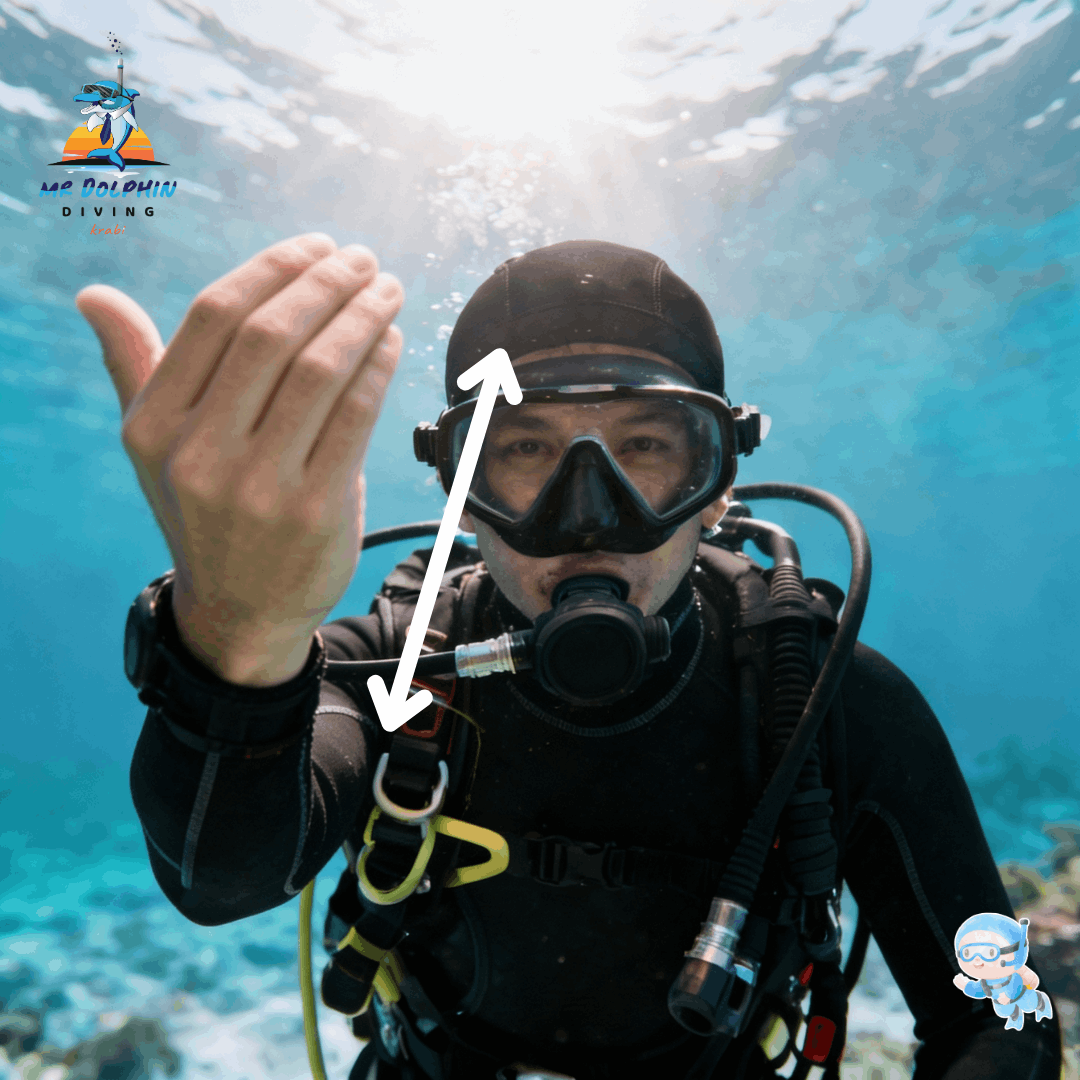
One arm extended forward, palm facing upward, fingers curling inward in a natural beckoning gesture. Used by guides to bring the group together, or between buddies when one has found something worth looking at.
7. Look / Watch This
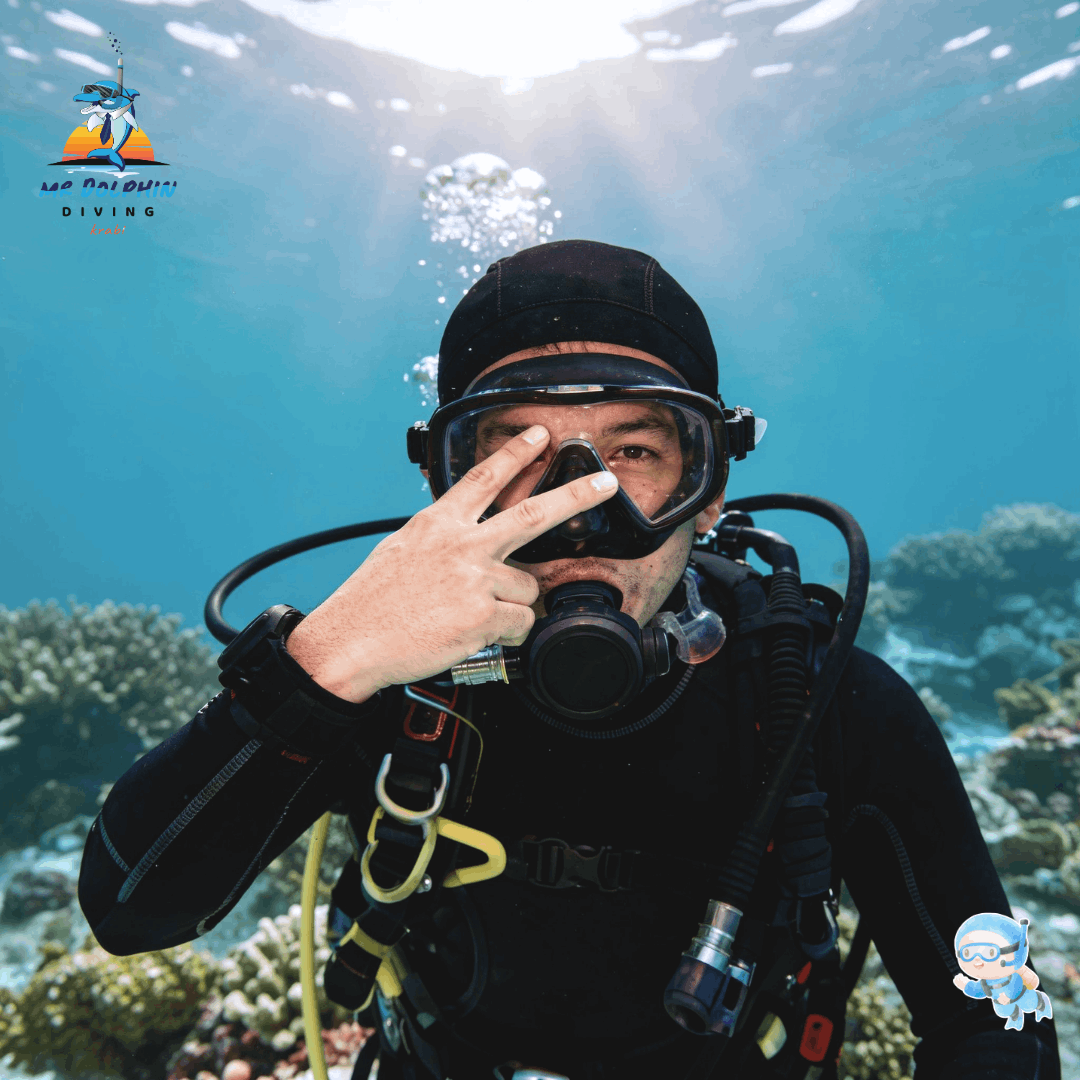
Two fingers pointing at the eyes, then turning to point outward in the direction of something. It means pay attention, look where I am pointing. Usually followed by pointing at a fish, turtle, or reef feature.
8. Low on Air

Closed fist tapping against the chest. This signals that your air supply is getting low, typically under 70 bar. When you see this from your buddy, it is time to start heading back.
9. Out of Air
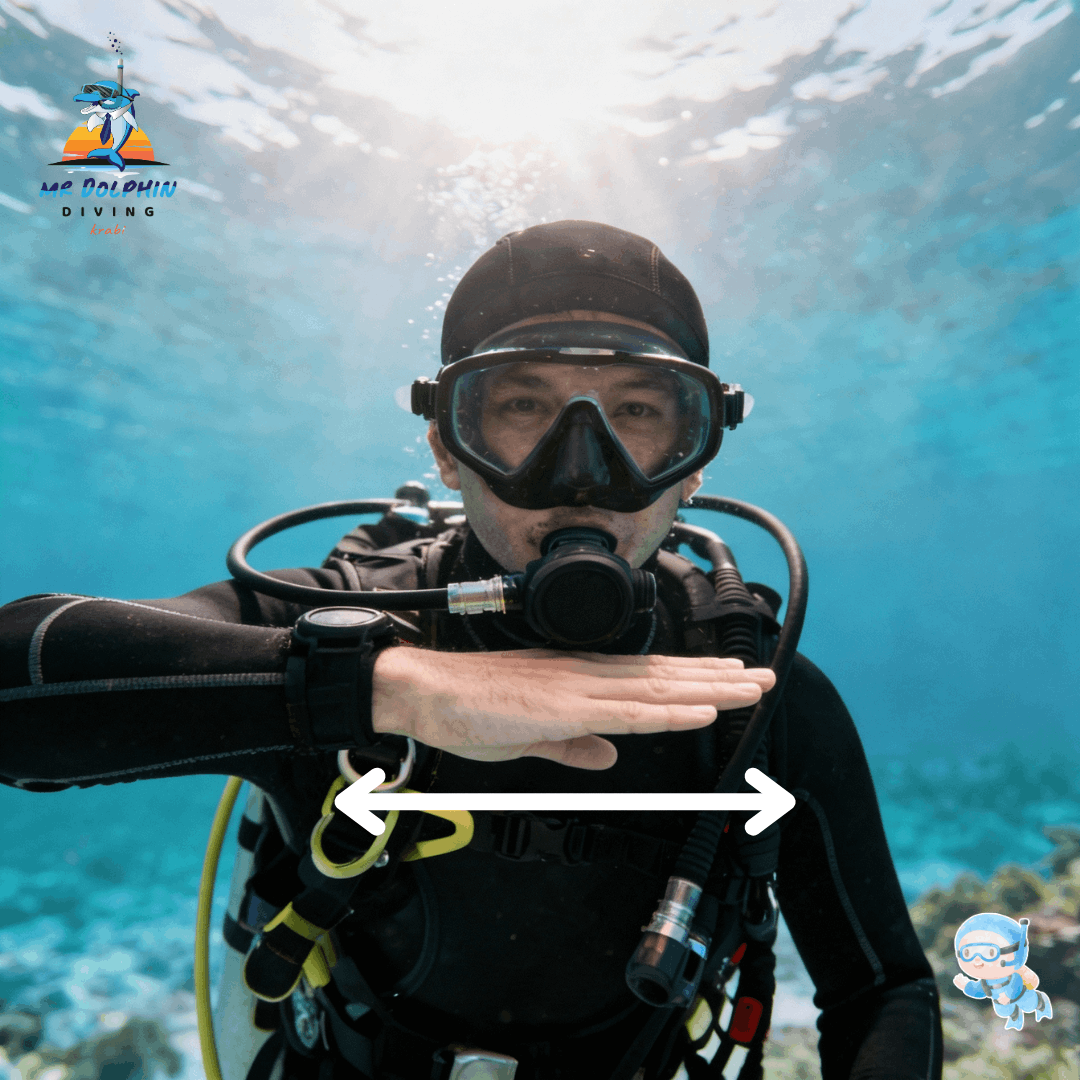
Flat hand drawn across the throat in a slicing motion. This is an emergency signal, meaning the diver has no air left. According to The Cenote Guy’s essential guide to scuba diving hand signals, this signal requires an immediate response: the receiving diver must offer their alternate air source without hesitation.
Every diver should know where their buddy’s alternate air source is before entering the water. When you see this signal, act immediately.
10. Equalise / Ear Problem
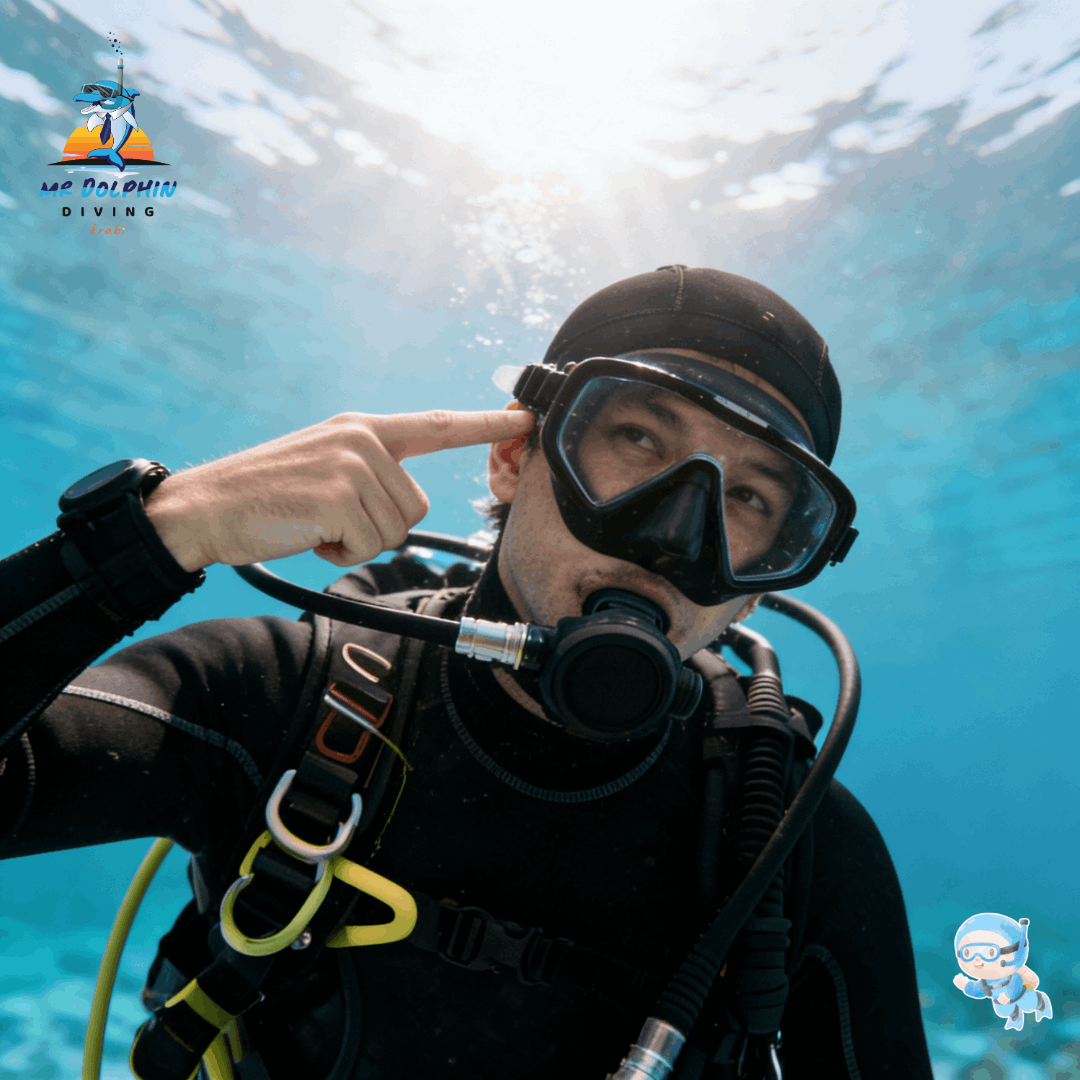
Index finger pointing at the ear. Used to signal trouble equalising during a descent. If you see this from your buddy, slow down or stop descending entirely until they sort it out.
Forcing a descent when your ears will not equalise can cause a perforated eardrum. Slow down, try again, and signal the guide if it is not clearing.
11. Level Off / Stay at This Depth
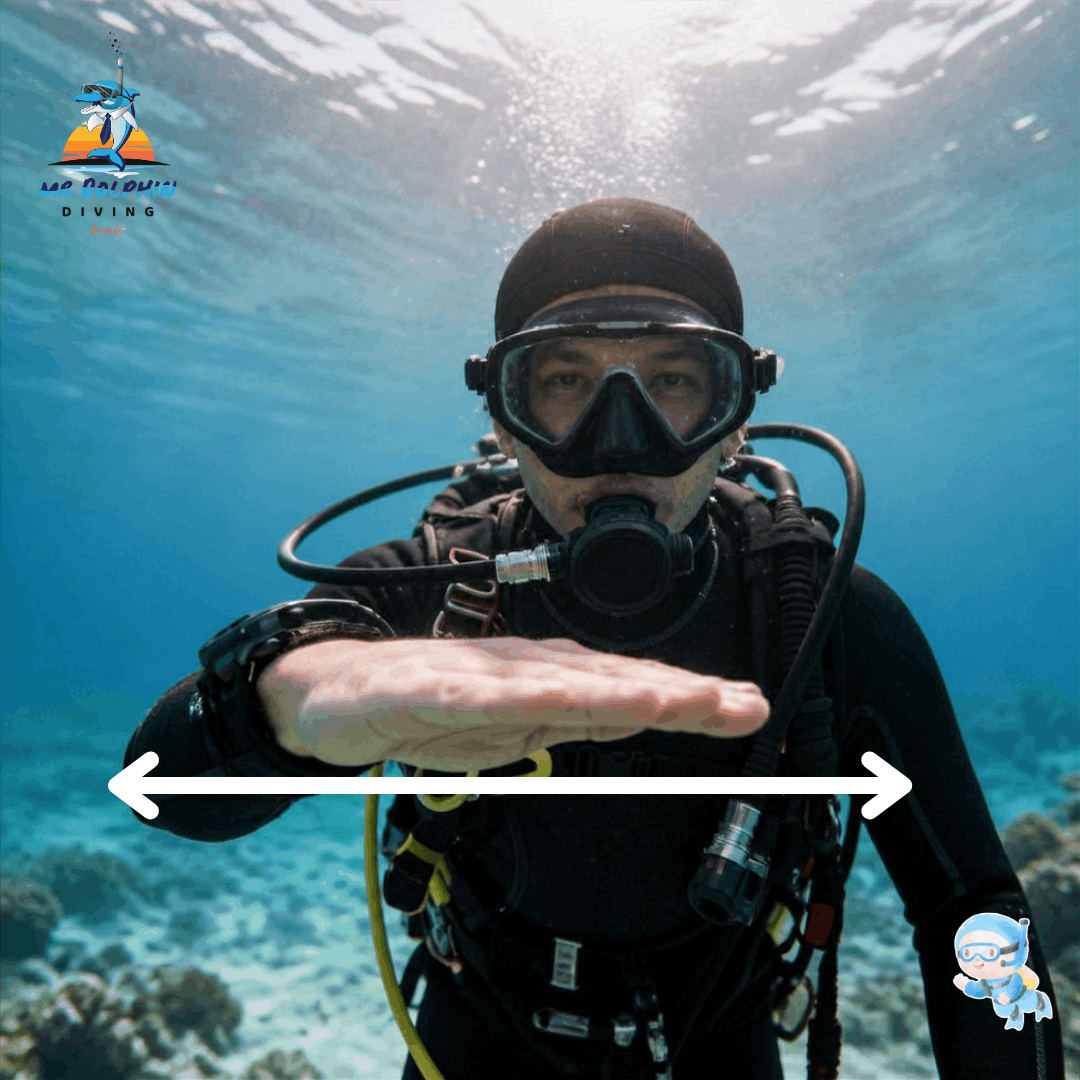
Flat hand held horizontally, palm down. Used by guides to tell the group to hold a particular depth. You will use this signal a lot once you move into Advanced Open Water dives that go deeper.
12. Turn Around / Go Back

Index finger pointed up and rotated in a circle. Means it is time to turn and head back the way you came. Usually given when air levels or bottom time mean the group needs to return.
13. I Don’t Feel Well
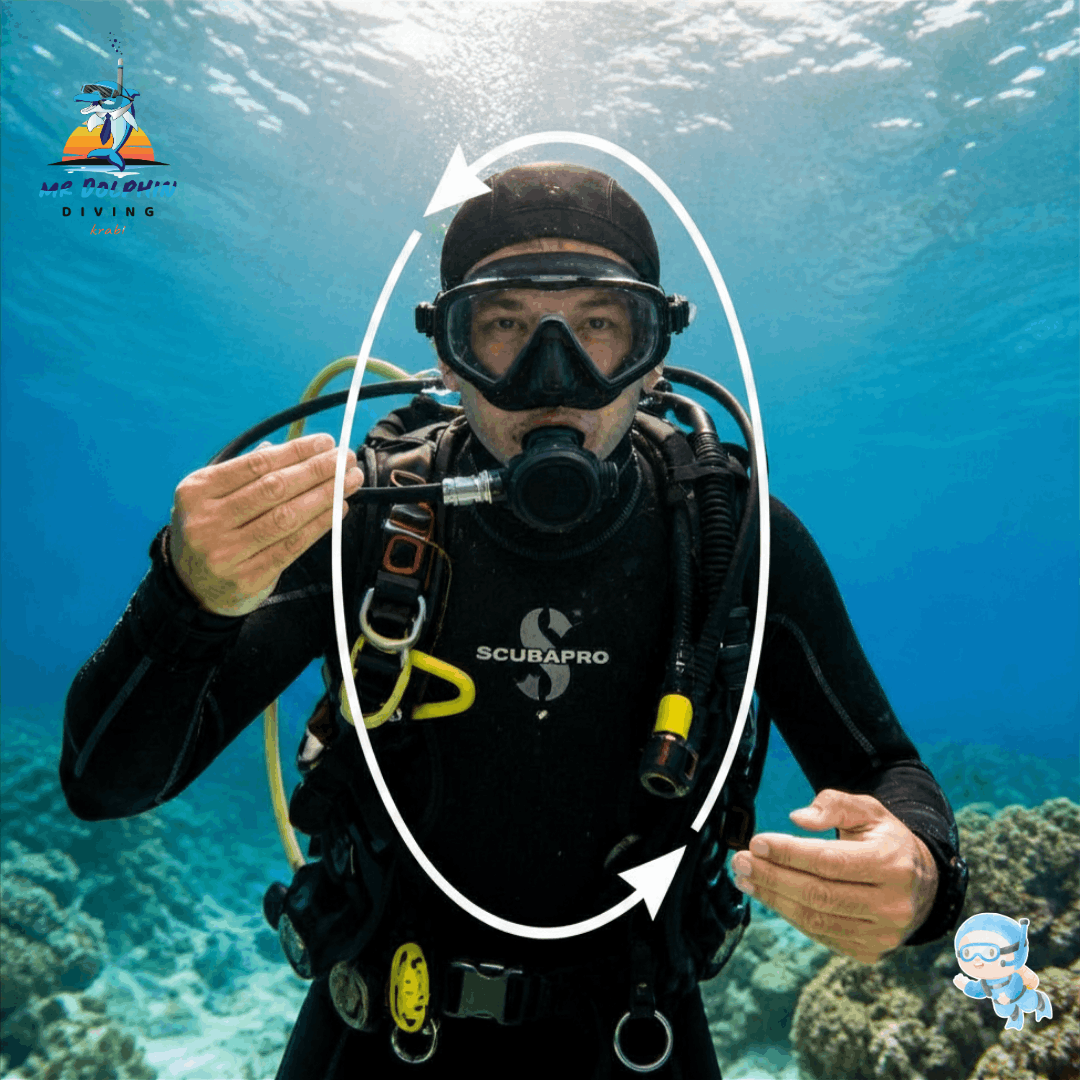
Point your fingers toward yourself and draw a large oval in front of your head and torso. This signal was added to PADI scuba courses in 2023 as an official standard signal.
According to Divers Alert Network (DAN), having a specific signal for illness helps divers communicate sooner when they start feeling unwell underwater, which can lead to a faster and more appropriate response from their buddy. If you see this signal, treat it seriously and begin a controlled ascent with your buddy.
Ocean Reef Communication: What Changes at Depth
The further down you go, the more colour drops out of the visible spectrum. Reds disappear first, then oranges. By around 10 to 15 metres, most colours appear in shades of blue and green. This affects how clearly signals read, especially if visibility is limited.
A few practical notes for deeper dives or low visibility conditions:
- Keep signals large and deliberate. Small finger movements can disappear against a reef background.
- Use a torch to illuminate your hands if vis is poor. Make sure your scuba diving mask has a wide field of view so you catch signals from your peripheral vision.
- Make eye contact before signalling. A signal no one sees is no signal at all.
- Some divers use underwater slates for more complex communication, particularly useful on technical dives or photography dives at Koh Phi Phi where you might want to describe a specific dive plan.
A Note on Regional Variations
Most scuba hand signals are consistent globally, but a few vary between training agencies or regions. PADI, SSI, and NAUI all teach the same core signals, but local dive communities sometimes develop their own shorthand.
According to the Divers Alert Network (DAN), unfamiliar signals between dive buddies are a contributing factor in some underwater incidents. If you are diving with a new guide or buddy, take two minutes before the dive to confirm the signals you will both use.
At Mr. Dolphin, we run a quick briefing before every dive that covers the signals your guide will use on that specific trip. Do not skip it, even if you are already certified.
Before Your Next Dive in Krabi
The reefs around Ao Nang and Koh Phi Phi are some of the most active diving in Thailand. You will share the water with marine life, other divers, and sometimes strong currents. Clear communication with your buddy and guide is not just good practice. It is what keeps the dive enjoyable.
Mr. Dolphin is a PADI-certified dive center based in Ao Nang, Krabi, with over 7 years of experience running dives in the area. Our lead instructor, Luca, brings more than 25 years of dive industry experience to every trip. Whether you are just starting out with a Discover Scuba Diving session, working toward your Open Water certification, or heading out on a guided fun dive to Koh Phi Phi, our guides will walk you through the signals in your pre-dive briefing before every single dive.
Quick Reference: Core Scuba Hand Signals
| Hand Gesture | Meaning |
| Circle with thumb and index finger | OK / I am fine |
| Flat hand rocking side to side, palm down | Not OK / Something is wrong |
| Thumb up | Ascend |
| Thumb down | Descend |
| Open palm facing outward | Stop |
| Palm down, fingers beckoning inward | Come here |
| Two fingers to the eyes, then point outward | Look at this |
| Closed fist tapping chest | Low on air |
| Flat hand drawn across throat | Danger / General emergency |
| Index finger pointing at the ear | Ear problem / Cannot equalise |
| Flat hand horizontal, palm down | Level off / Hold depth |
| Index finger rotating in a circle | Turn around / Head back |
| Fingers pointing inward, draw an oval in front of the body | I don’t feel well |