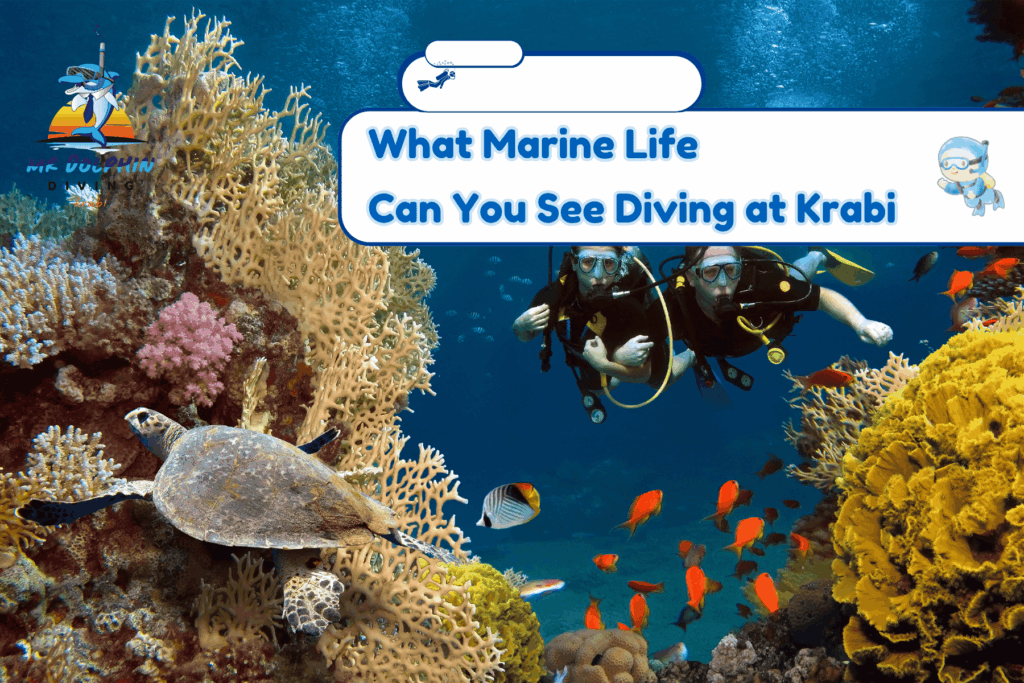
Most people who book a dive trip out of Ao Nang are picturing clear water and pretty coral. What actually surprises them is how much is swimming around in it. Krabi sits right on the edge of the Andaman Sea, and between the local island reefs and the boat ride out to Phi Phi, there is a genuinely wide range of marine life on offer, from tiny reef residents to the occasional big pelagic passing through.
Here is a species-by-species look at what you can realistically expect to see.
Are There Sharks in Krabi
Yes, and more often than most first-time divers assume. There are two species you are likely to actually encounter, and they behave quite differently from each other, which is worth knowing before you go looking for either.
Blacktip Reef Shark
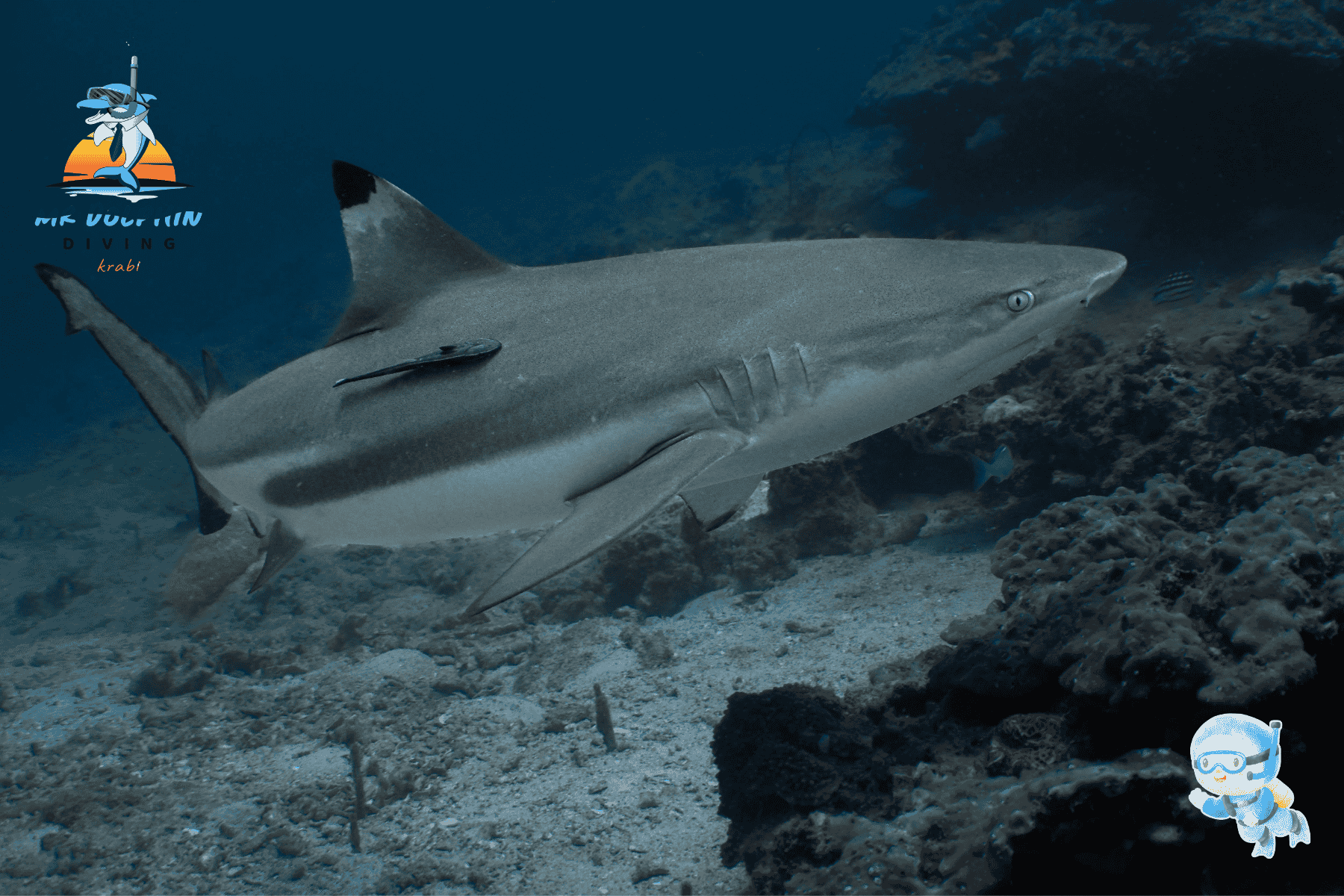
Small, shy, and usually already swimming off by the time you notice it. Blacktips tend to cruise the shallower reef edges around Bida Nok and occasionally other sites, especially around Phi Phi, rather than come anywhere near divers, so a sighting is often brief. They rarely grow past a metre and a half, and they are far more interested in the small fish along the reef edge than in anyone watching them from a few metres away. If you want a decent look, staying still and low rather than swimming toward one tends to work better.
Leopard Shark (Zebra Shark)
The more reliable sighting of the two. Leopard sharks spend most of the day resting on the sandy bottom instead of swimming around, which makes them far easier to spot once your guide knows where to look, and because they barely move, even divers on their Open Water course tend to get a calm, close look at one. Their spotted pattern as juveniles is where the zebra name actually comes from, even though adults lose most of the stripes and end up more speckled.
Occasionally, with a good amount of luck, a whale shark is spotted passing through the area too. It is never something we can promise on any given trip, but it does happen.
Turtles
Green Turtle and Hawksbill Turtle
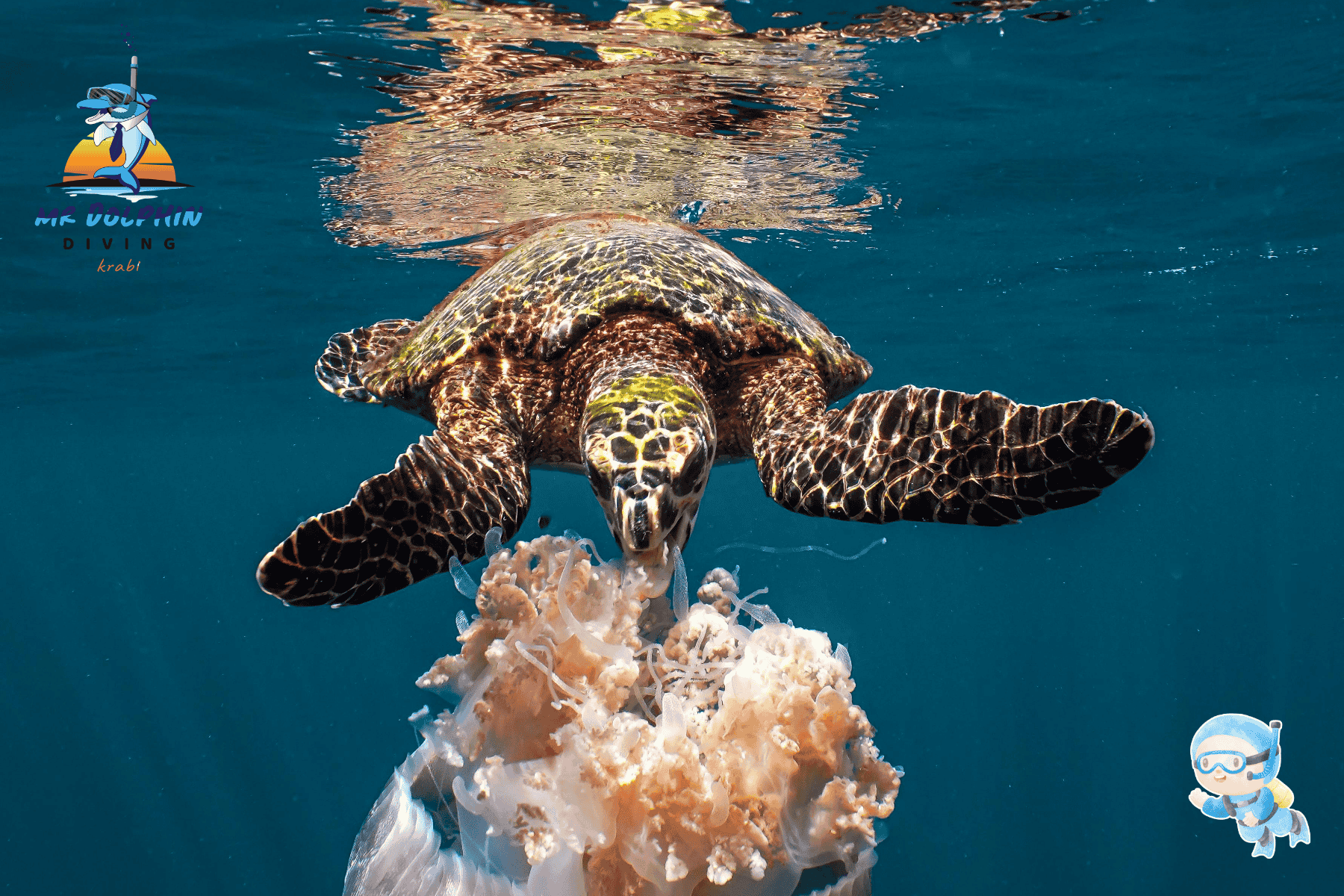
Both species turn up regularly around Krabi’s reefs, often grazing on soft coral or resting in a sheltered spot between swims up for air. Give one enough space, and it will usually keep doing exactly what it was doing before you arrived, which is really the best outcome for both of you. Hawksbills tend to be a little more skittish than green turtles, so a slower approach and a bit of patience usually pays off better than trying to get close quickly.
Reef Regulars You Will See on Almost Every Dive
This is the marine life that shows up no matter which site you end up at, so it is worth knowing what to look for even though nobody plans a trip specifically around it.
Clownfish or Anemonefish
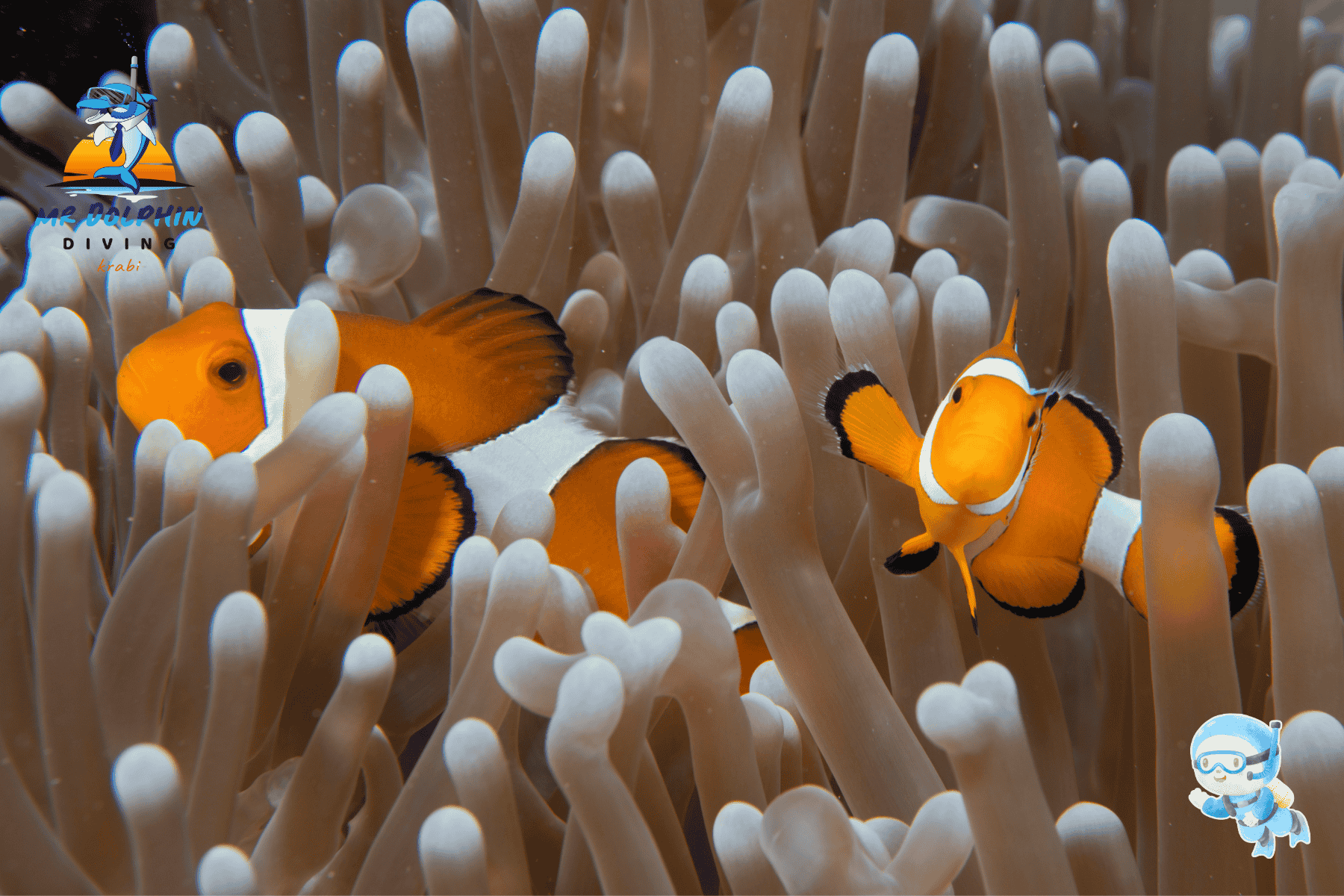
Darting in and out of their host anemone, usually the first thing new divers spot and photograph. There are several colour variations depending on the site, and they rarely stray far from the same anemone for their entire lives.
Parrotfish
Grazing steadily on coral, easy to identify by their beak-like mouths and bright colouring. Their constant grazing actually plays a real role in reef health, breaking down old coral into the fine white sand that ends up on Krabi’s beaches.
Butterflyfish
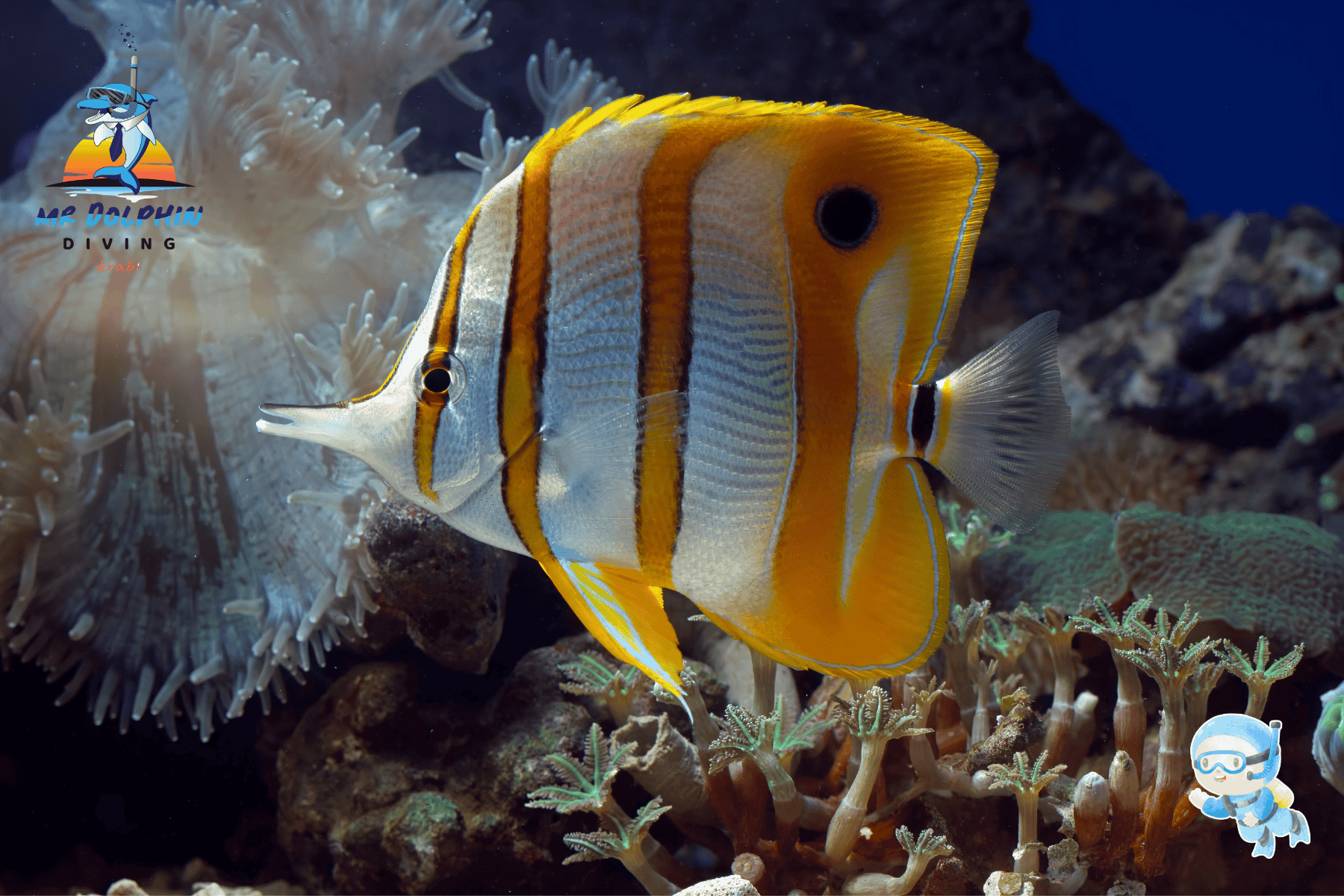
Almost always seen working the reef in pairs rather than alone, and often paired for life, which is part of why spotting one usually means spotting two.
Moray Eel
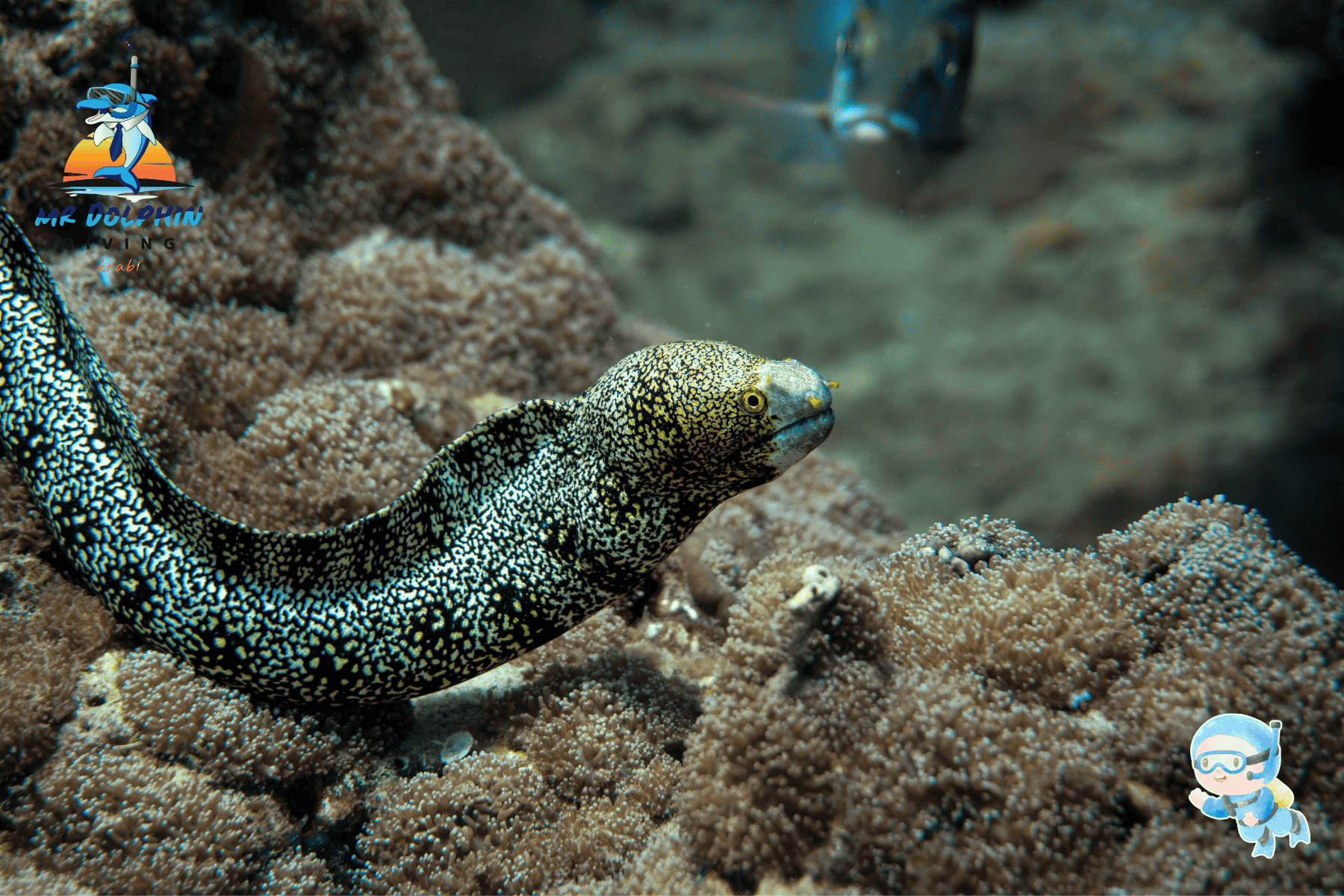
Usually just the head, poking out from a crevice in the reef, watching rather than moving. The open-mouthed look that surprises a lot of new divers is simply how they breathe, not a sign of aggression.
Barracuda and Bigger Schooling Fish
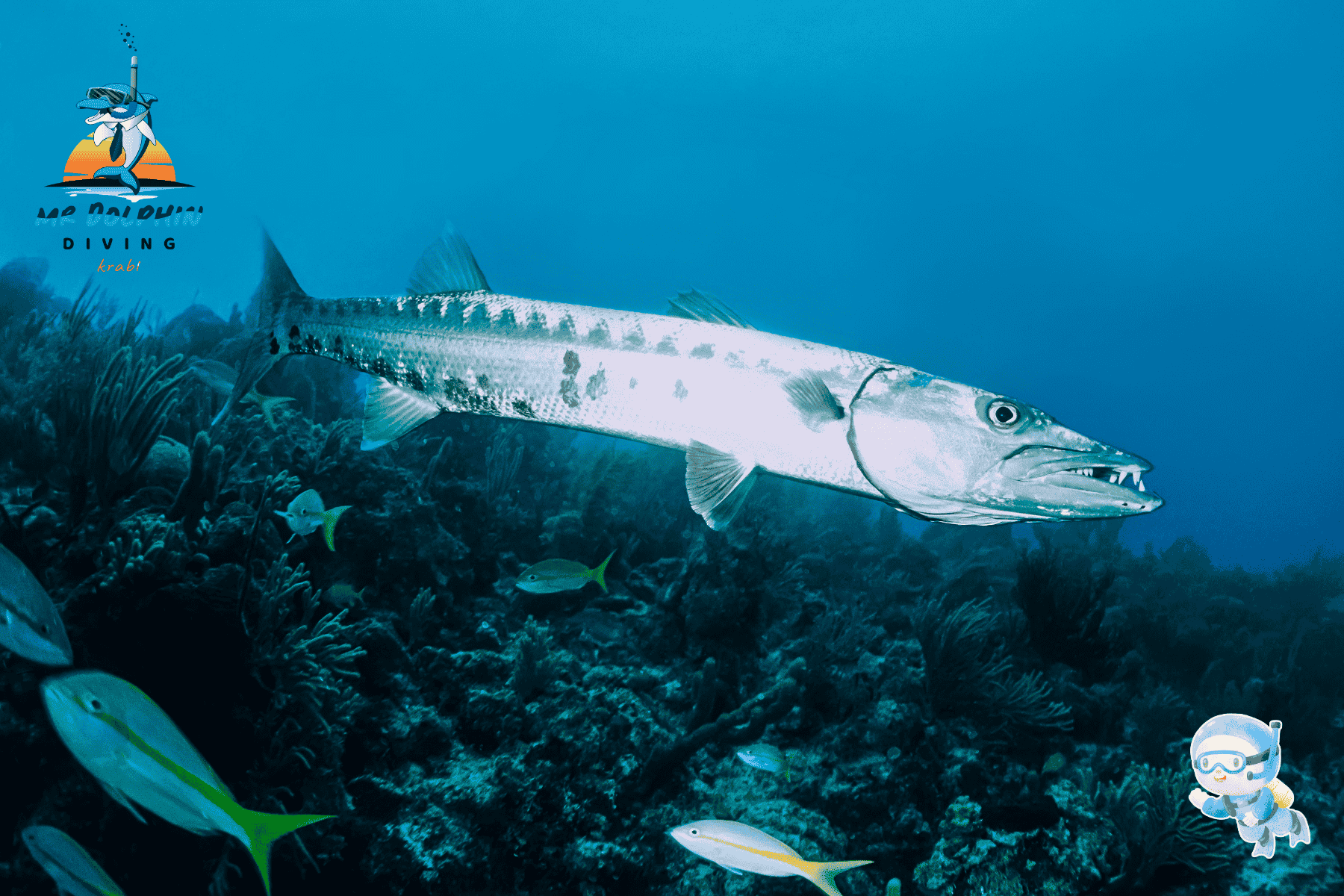
Around the wreck sites and deeper reef walls near Phi Phi, it is common to run into schools of barracuda hanging in the current, sometimes in numbers large enough to genuinely surprise divers who are not expecting it. They tend to hold their position rather than scatter, so a good instructor will usually pause the group nearby to let everyone take it in rather than swimming straight through and missing it.
Macro Life for Anyone Who Likes Looking Closely
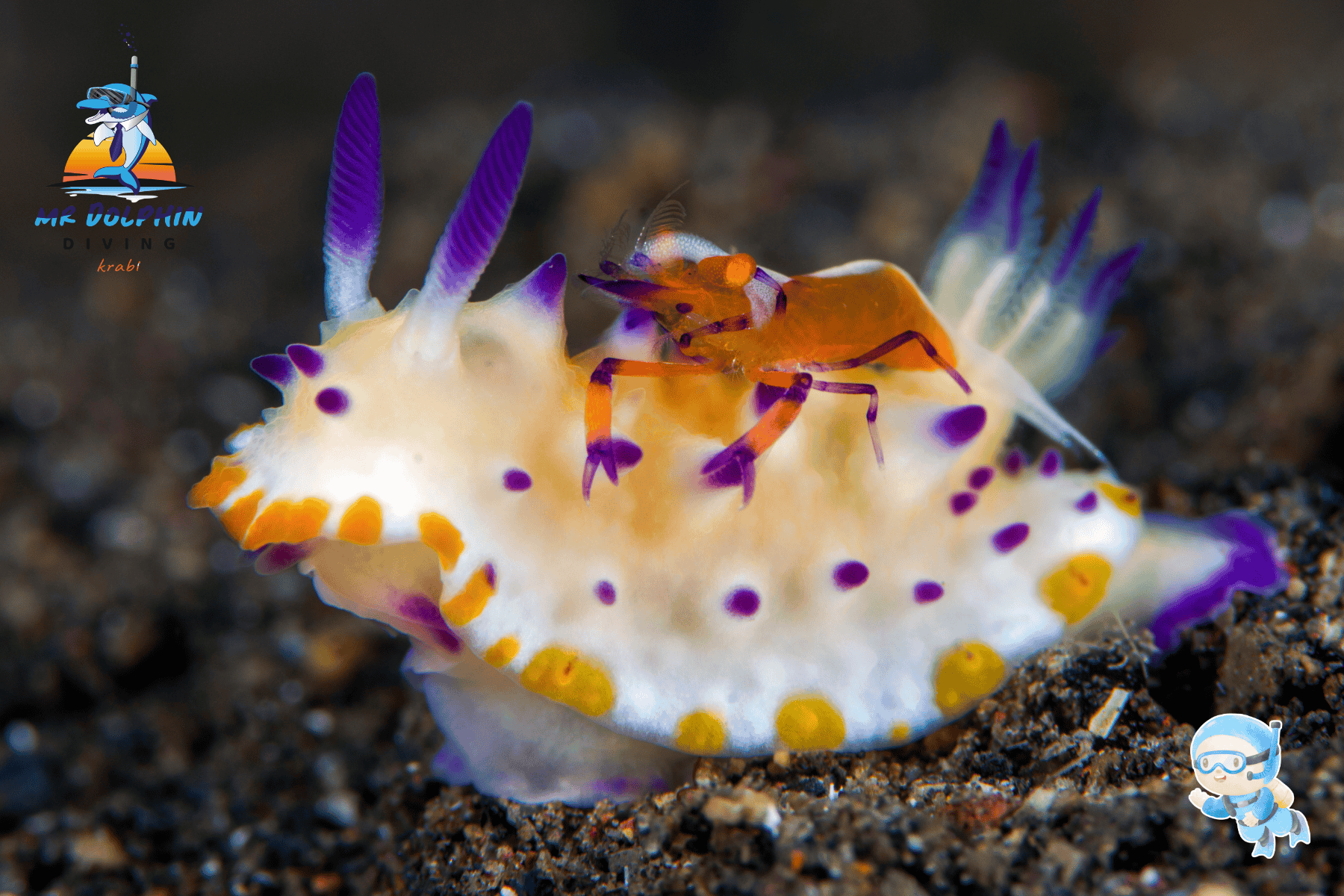
Nudibranch
Small sea slugs in a surprising range of colours, usually found on the reef itself rather than swimming freely. Different species show up depending on the season and the site, which keeps this one interesting even for divers who have done the same reef dozens of times.
Reef Shrimp
Tiny and usually tucked into coral crevices. These sightings depend a lot on having a guide with a sharp eye, which is one of the reasons small dive groups make a difference. Nobody is trying to keep track of twelve people while also spotting a two-centimetre shrimp.
Timing Affects What You See
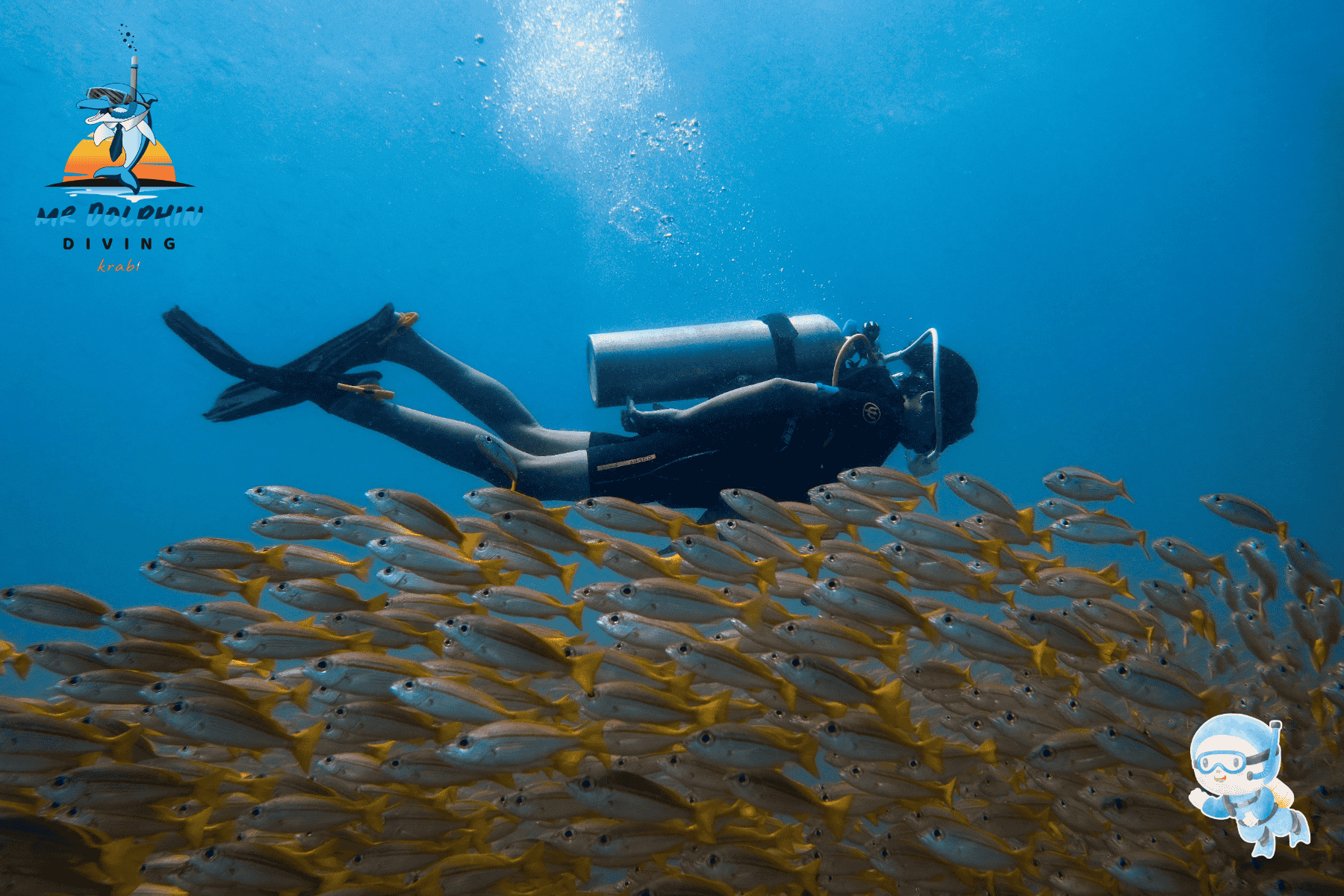
Marine life in Thailand shifts a little with the seasons, and Krabi is no exception. As we cover in more detail in our guide to Krabi’s diving season, the dry months from November to April bring calmer water, better visibility, and generally the best conditions for spotting the bigger stuff further offshore. The rest of the year is quieter on the big sightings but still delivers healthy reefs, turtles, and the regular cast of reef fish, minus the peak season crowds.
Where You Actually Go Matters More Than Luck
A lot of what you see on a dive comes down to which sites you visit, which is really a question of which operator you are diving with and how well they know the area. Local island trips around Koh Yawasam and Koh Sii are solid for reef fish and turtles, and tend to suit divers who are newer to the water or short on time. The full day out to Phi Phi opens up the wreck sites and the deeper reef walls, where the sharks and bigger schooling fish tend to show up more, though it does mean a longer boat ride each way. Both routes are covered in our breakdown of what diving actually costs in Krabi, if you are still weighing up which trip fits your budget and your schedule.
At Mr Dolphin, our instructor Luca has spent years learning exactly where to look at each of these sites, and we keep our groups small so nobody misses a sighting because they got stuck at the back. Whether you are just starting out with a Discover Scuba session, working toward becoming a Divemaster, or already certified and chasing something specific, we can point you toward the sites that give you the best chance of seeing it.